Grid Health Intelligence, Delivered in Real Time
Signal-based fault detection and localization for utilities, critical infrastructure, and high-risk environments. Reduce ignition risk. Accelerate response. Protect what matters.
- Meter-level accuracy across a mile of conductor per sensor
- Millisecond anomaly classification—know the exact fault type instantly
- Works with existing infrastructure—no major retrofits
- Real-time dashboard alerts with near-instantaneous fault notifications

“GridIQ, a startup using intelligent sensors to detect and isolate electrical faults in real time, aiming to stop wildfires before they start.”
Distribution-Level Visibility Is the Missing Layer
Utilities and critical infrastructure operators lack real-time situational awareness at the edge of the grid—where faults happen, fires ignite, and outages cascade.
Equipment-Caused Ignitions
Arcing, conductor contact, and equipment failures on distribution lines are a leading cause of catastrophic wildfires.
Milliseconds Matter
Most ignitions escalate within seconds. Legacy systems detect faults too slowly—or not at all—to prevent fire spread. GridIQ classifies anomalies in milliseconds.
Localization Gaps
Knowing a fault occurred isn't enough. Crews need meter-level accuracy across miles of conductor to respond before conditions worsen.
Rising Stakes
Wildfire liability, PSPS events, and regulatory pressure are forcing utilities to modernize faster than ever.
Smart Grid Health Monitoring
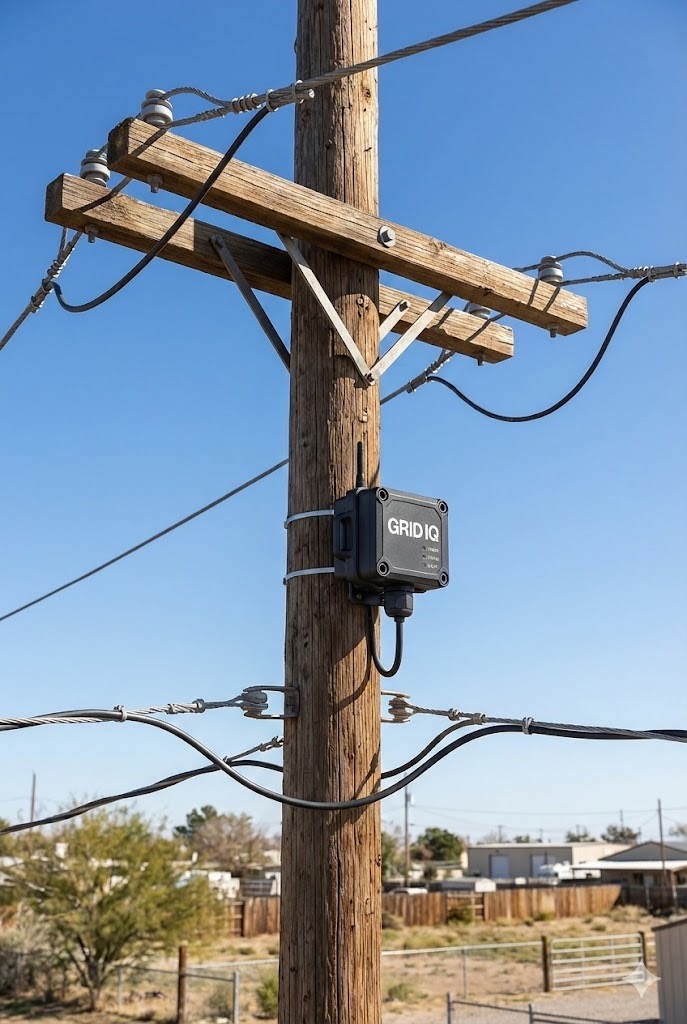
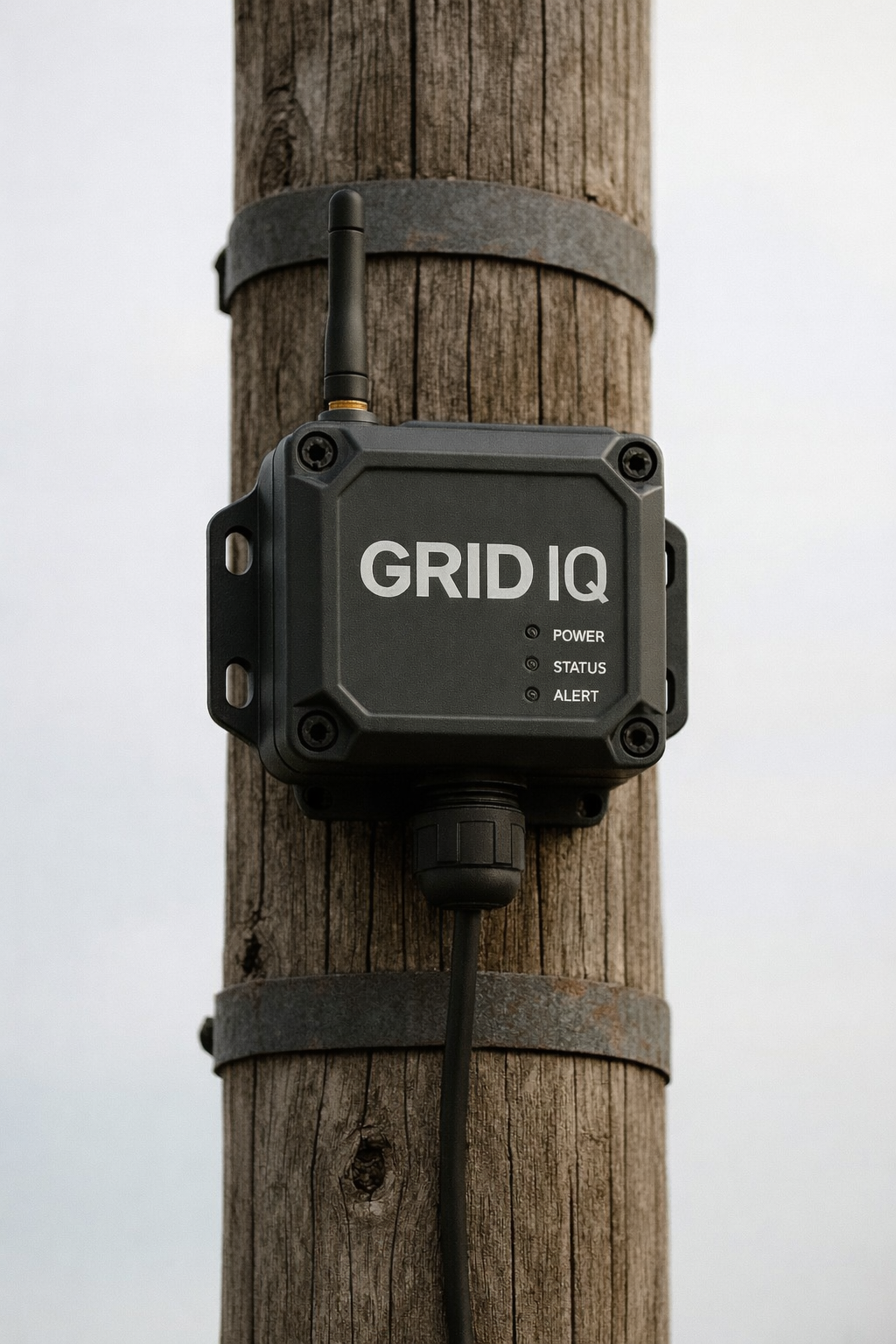
GridIQ deploys patent-pending, signal-based sensors that continuously monitor distribution infrastructure. We detect faults, localize them with precision, and deliver actionable insights—so you can act before conditions escalate.
Millisecond Anomaly Classification
Instantly categorize fault types—arcing, contact, equipment failure—within milliseconds for faster, smarter deployment decisions.
Mile-Wide, Meter-Level Accuracy
A single sensor monitors up to one mile of conductor with meter-level accuracy to pinpoint exactly where faults occur.
Real-Time Situational Awareness
Continuous monitoring with instant alerts to operations and field crews—know what's happening before it escalates.
Legacy-Compatible Design
Integrates with existing infrastructure—poles, reclosers, and aging equipment.
Wildfire Prevention & Ignition Risk Reduction
GridIQ was built for the most demanding environment: high fire-threat districts where seconds determine whether a fault becomes a catastrophe.
Detect Conditions Associated with Ignition
Identify arcing, incipient faults, and conductor anomalies before they escalate to fire.
Enable Faster De-Energization Decisions
Provide operations teams with the confidence to act quickly—reducing PSPS scope and duration.
Pinpoint Fault Location for Rapid Patrol
Guide field crews to the exact location, minimizing search time in high-risk terrain.
Support Post-Event Forensics
Capture high-fidelity event data for regulatory reporting and continuous improvement.
Grid Health for Every High-Stakes Environment
The same precision that prevents wildfires delivers value across critical infrastructure, resilience applications, and emerging electrification corridors.
Data Centers & Critical Facilities
- Monitor incoming distribution feeds for fault precursors
- Validate power quality and grid health before it impacts operations
- Support uptime SLAs with real-time grid visibility
Transportation Electrification
- Rail corridors, airports, ports, and EV charging infrastructure
- Detect faults on traction power systems and charging networks
- Enable rapid isolation and restoration along linear assets
Hurricane & Storm Hardening
- Accelerate post-storm damage assessment and restoration
- Validate restored circuits before re-energization
- Build storm-season resilience with continuous monitoring
Microgrid Monitoring
- Tribal lands, campuses, remote communities, military installations
- Fault detection at the islanded or grid-tied microgrid boundary
- Situational awareness for distributed energy resources
Underground Distribution
- Monitor cable health without excavation or visual inspection
- Detect incipient faults in URD systems before failure
- Extend asset life with condition-based maintenance insights
Utility Reliability & Outage Minimization
- Reduce SAIDI/SAIFI with faster fault localization
- Support proactive maintenance and vegetation management
- Improve regulatory performance metrics
How It Works
From sensing to action—a continuous loop of grid health intelligence
Detect
Sensors continuously monitor electrical signatures across your distribution network, identifying anomalies and fault conditions in real time.
Locate
Proprietary signal analysis pinpoints fault location with meter-level precision—no dense sensor arrays or line-of-sight required.
Assess
Cloud analytics classify fault type and severity, correlating with environmental and operational context for actionable insight.
Act
Alerts push instantly to your real-time dashboard, mobile crews, and enterprise systems—enabling rapid response before conditions escalate.
GridIQ vs Legacy Technology
End-to-End Grid Health Infrastructure
Purpose-built hardware, cloud analytics, and integrations—designed for utility-grade reliability and enterprise deployment.
Edge Sensors
Ruggedized, pole-mounted devices with cellular connectivity. Designed for harsh environments and rapid deployment.
Cloud Analytics
Scalable signal processing and fault classification. Real-time dashboards and historical trend analysis.
Alerting Engine
Configurable thresholds and notification rules. Push to email, SMS, webhook, or enterprise alerting systems.
Integration Layer
APIs and connectors for OMS/DMS, GIS, and work management platforms.
Security-First Architecture
We understand that utilities and critical infrastructure operators require rigorous data protection. Security is foundational to how we build and operate GridIQ.
Data Protection
- End-to-end encryption for all data in transit and at rest
- Role-based access control (RBAC) for platform users
- Comprehensive audit logging and event tracing
Security Commitment
- Designed with utility-grade security requirements in mind
- NERC CIP-aware architecture principles
- Ongoing investment in security certifications and audits
Operational Resilience
- Redundant cloud infrastructure for high availability
- Graceful degradation and failover capabilities
- Dedicated engineering support for pilot deployments
Build the future of grid intelligence
We work with utilities and critical infrastructure operators on problems that matter. When roles open, they will appear here.
No opportunities available at this time
We are always interested in exceptional people. Send a note to pilots@gridiq.io with your background and what you would like to work on.